
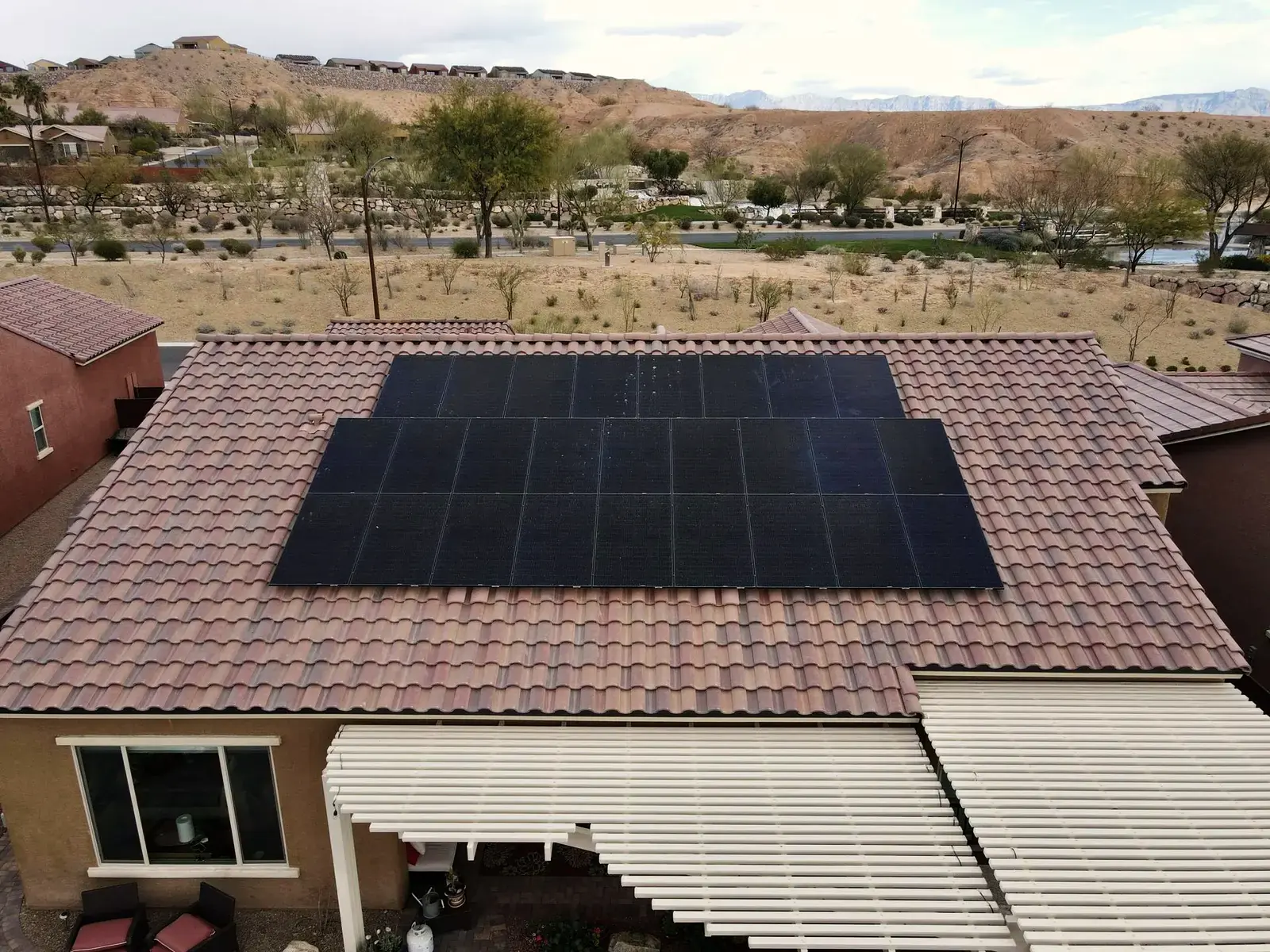
The 30% federal tax credit homeowners used to claim on solar ended on December 31, 2025. That's true, and you'll hear it a lot.
What you'll hear less often: a different federal credit, the one businesses get for owning solar, is still available. With the right financing, that credit can still bring down what you pay for a solar system on your home. We offer one of these plans in Southern Utah. Here's how it works, in plain terms.
The short version
- You can't claim a solar tax credit on your own tax return anymore. Anyone who tells you otherwise for a system installed in 2026 is wrong.
- A company can still claim a business credit on a system it owns. It can pass that value to you as a lower price.
- A prepaid solar plan is how that works. You make one upfront payment at a discount. The finance company owns the system, and after the sixth anniversary you have the option to buy it.
Which credit ended, and which didn't
The credit homeowners claimed was the Residential Clean Energy Credit, Section 25D of the tax code. The IRS says it isn't allowed for any expenses after December 31, 2025, and it counts the expense on the day installation is completed. A system finished in 2026 doesn't qualify, even if you paid for it in 2025.
Businesses that own solar claim a different credit, Section 48E. It's still available for a limited time. Under the 2025 law, a company-owned residential project had to begin construction by July 4, 2026, or be placed in service by December 31, 2027. That first date has passed, so a new project now needs to be up and running by the end of 2027.
So the credit didn't disappear. It moved from your tax return to the company that owns the equipment.
How a prepaid solar plan works
We use a prepaid plan from Maxwell Power, a solar and battery finance company formerly known as HDM Renewable Finance. Other companies offer similar plans. Here's the general shape of it.
- We design the system for your home, solar, a battery or both, just as we would for a cash purchase.
- You make one upfront payment, below the regular purchase price because Maxwell claims the business credit and shares part of it with you. You can pay cash or finance the prepayment through us.
- Maxwell owns and maintains the system under a long-term power agreement and backs it with a production guarantee. In Maxwell's words, if your system doesn't produce, you don't pay. Since you've already prepaid, ask how that guarantee pays out and how it's measured.
- After the sixth anniversary, you have the option to buy the system. Maxwell describes the six-year wait as a federal requirement. Your contract spells out the price to take ownership and how it's set, so get that number in writing before you sign. If you don't buy it, the agreement keeps running.
From your side, it feels a lot like buying solar: one payment and no monthly lease bill, with the option to own the system later. The difference is who owns it on paper in the meantime.
What it's worth compared with paying cash
For homes that qualify, the prepaid price is typically about 25% below our cash price. The exact discount depends on your system and when it's approved, so we show it in your proposal next to the regular cash price. That way you can see what the business credit is saving you before you decide.
What it doesn't change: your utility. The savings on your power bill still depend on whether you're with Rocky Mountain Power, Washington City or St. George City. Our post on whether solar is worth it in St. George breaks that down.
Questions to ask before you sign any prepaid plan
Prepaid plans are newer, and terms vary between companies. Get these answers in writing, from us or from anyone else.
- What exactly happens after year six, what does the contract say it costs to take ownership, and what happens if you don't?
- What does the production guarantee cover, and how are you paid if the system comes up short?
- What happens if you sell the house before year six? The buyer usually takes over the agreement, so ask for the transfer steps.
- What's filed against the equipment? These plans usually file a notice on the panels, not your house. Confirm that.
- Who services the system after you take ownership, and which warranties transfer to you?
Is it a fit for you?
A prepaid plan usually makes sense if you plan to stay in your home at least six years, you'd like to own your system eventually, and you want the business credit working for you on price. It's less of a fit if you expect to move soon or you'd rather not have a third party involved for the first six years.
The business credit has a deadline, so this option won't last forever. If you're thinking about solar or a battery, it's worth getting a proposal while it's still available. We'll show you the prepaid price next to the cash price so you can compare, and we offer solar design and installation across Southern Utah.
Sources
- FAQs for modification of sections 25C, 25D … under the One Big Beautiful Bill Act, IRS fact sheet FS-2025-05, August 21, 2025. Section 25D ends for expenses after December 31, 2025, counted when installation is completed.
- How does H.R.1 change the residential solar ITC?, Solar Power World, July 2025 (updated July 28, 2025). Section 48E deadlines for company-owned residential systems.
- Maxwell Power, company site, checked October 30, 2026. Prepaid plan, production guarantee and the option to buy after the sixth anniversary.
- HDM Renewable Finance rebrands as Maxwell Power, pv magazine USA, June 2, 2026.
- Zion Electric & Solar, typical prepaid discount for qualifying homes and prepayment financing, as of October 2026.
- Pre-paid solar leases and PPAs: are they worth it in 2026?, EnergySage, updated October 16, 2026. How prepaid plans work and what to check in the contract.