
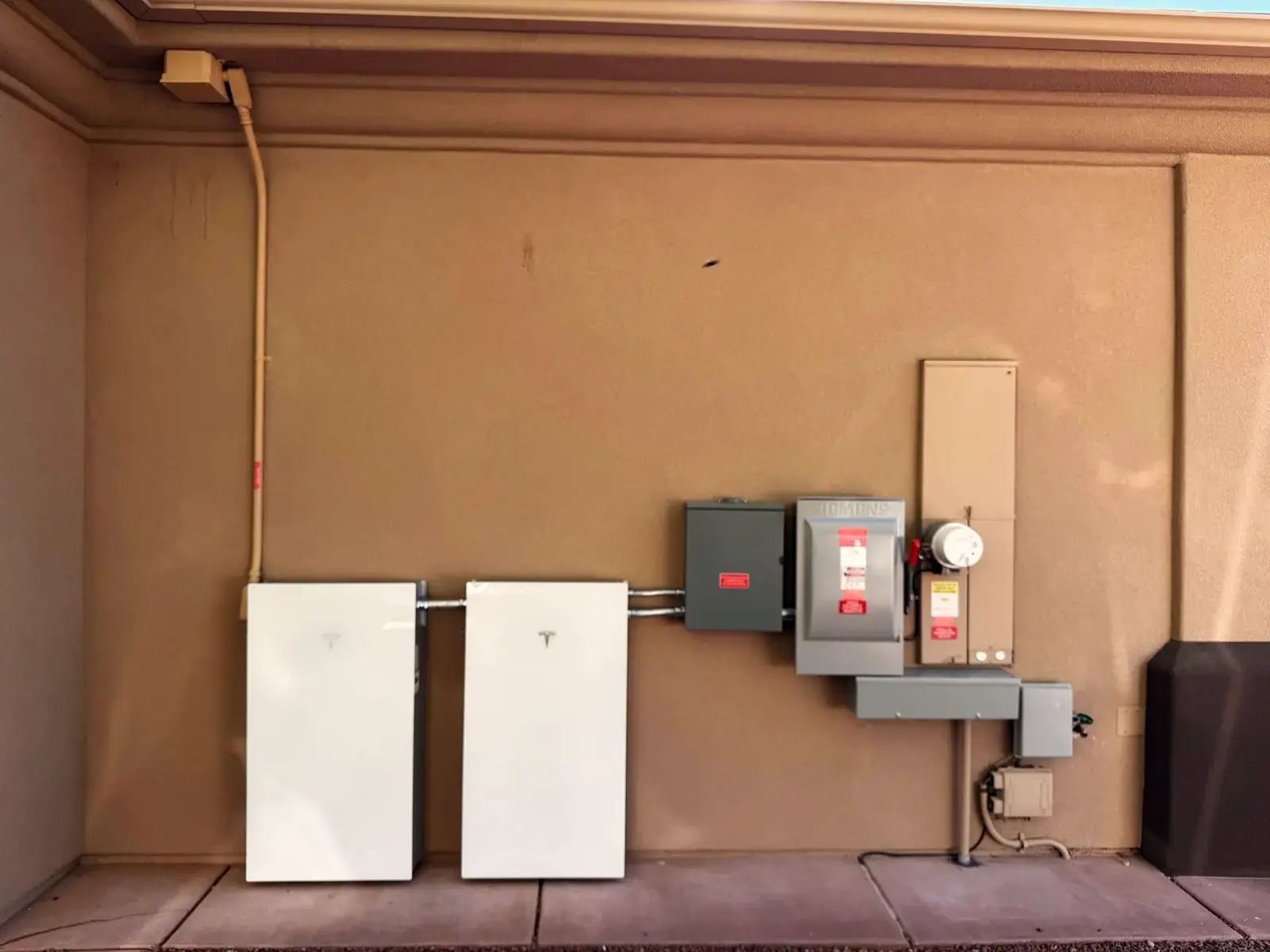
We install a lot of batteries, and we also talk a fair number of people out of them. A battery is a great fit for some homes and an expensive extra for others. Here's how we think it through with customers.
Why people add a battery
There are really three reasons.
- Backup when the power goes out. A battery keeps your essentials running through an outage: the fridge, lights, internet, outlets, and in some setups a well pump or part of your air conditioning. It switches over automatically, runs silently and needs no fuel.
- Getting more value from your solar. If you send extra solar power to the grid, how much you're credited for it matters. A battery lets you store that midday power and use it yourself in the evening.
- Utility programs. Some power companies pay you to let them draw on your battery during peak demand.
How much the second and third reasons are worth depends almost entirely on your power company.
First, find out who your power company is
Southern Utah has more than one, and the rules are different for each.
- Rocky Mountain Power serves much of Utah. Its customers who connected solar after October 2020 are on a program called net billing. Power you send back to the grid is credited at a few cents per kilowatt-hour, far less than what you pay to buy power from the grid. That gap is exactly what a battery helps with.
- City-owned power departments. St. George, for example, gets its power from the city's own Energy Services department, and several neighboring cities run their own power departments too. Each sets its own rules for solar credits and batteries. If you're on city power, ask your city for its current solar policy, or ask us and we'll walk you through it.
What changed in 2026: no federal tax credit for homeowners
Until the end of 2025, homeowners could take a 30% federal tax credit on solar and batteries. That credit ended for systems installed after December 31, 2025. A battery you buy for your home in 2026 doesn't qualify.
If someone is quoting you a battery with a 30% federal credit built into the price, ask them to show you how they're getting it.
Leased systems work differently, because the leasing company owns the equipment and may still qualify for business tax credits for a limited time. If you're considering a lease, ask how that's reflected in your monthly price.
A battery probably makes sense if
- You're a Rocky Mountain Power customer on net billing and you use a lot of power in the evening.
- Outages are a real problem for you: medical equipment, working from home, a well pump, or food you can't afford to lose.
- You're adding solar anyway and want backup built in from the start.
- You want to take part in a utility program that pays you to share your battery at peak times.
You can probably skip it, or wait, if
- You're on Rocky Mountain Power's original net metering program. If your solar was connected before mid-November 2017, you likely still get full retail credit for what you send back, and that program runs until 2036. A battery adds backup, but little savings.
- Outages are rare and short where you live, and you'd be fine riding one out.
- Your budget is tight. Solar on its own pays back faster. A battery can usually be added later.
How big a battery do you need?
It depends on what you want to keep running, not on the size of your house.
- Essentials only. Fridge, lights, internet and some outlets. One battery often covers this through a typical outage.
- More of the house. Central air conditioning is the big one. Running it on battery takes more capacity, and usually a plan for which circuits come first.
We'll go through your actual usage and what matters to you during an outage, then size it to that. Sometimes the honest answer is that a smaller battery and a short list of backed-up circuits is the better buy.
What we install
We install Tesla Powerwall, Enphase IQ Battery and EG4 systems, and we can add a battery to most existing solar systems, including ones we didn't install. If you'd like help deciding, tell us about your home and we'll give you a straight answer, including when a battery isn't worth it.
Sources
- Connecting solar to the grid and export credit rates, Utah Clean Energy. Covers Rocky Mountain Power's net billing, transition and net metering programs. Export credit rates are updated every March 1.
- One Big Beautiful Bill Act fact sheet, Solar Energy Industries Association, July 2025. Covers the end of the residential solar credit (Section 25D) on December 31, 2025.
- Rocky Mountain Power Wattsmart Battery program, Utah Clean Energy. Incentive amounts have changed since the program began, so check current terms with Rocky Mountain Power.