
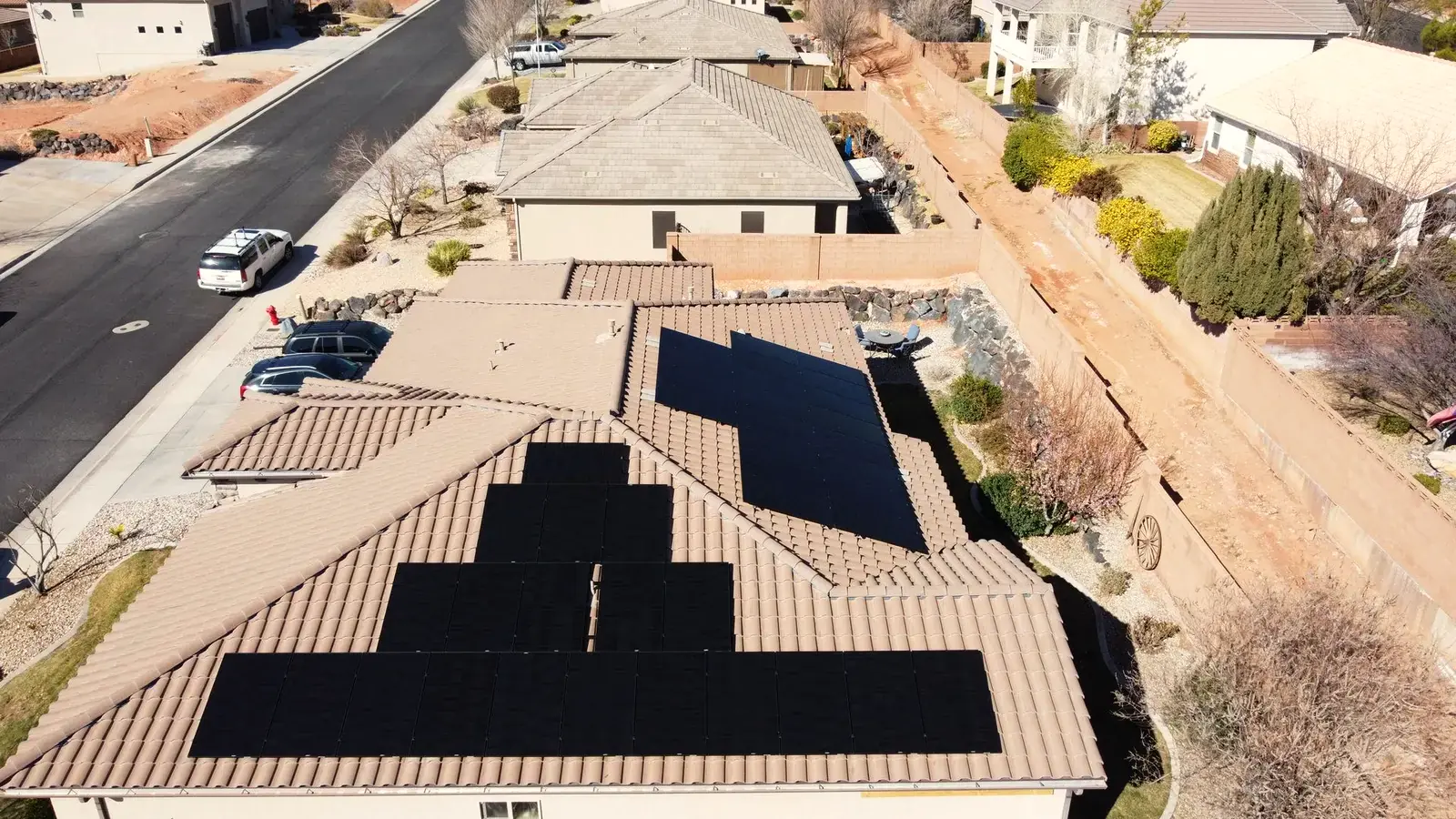
A lot of the companies that sold solar in Southern Utah over the last ten years have closed, been bought out, or simply stopped answering the phone. If yours is one of them, you're not alone, and you're not stuck.
The panels on your roof don't care who sold them. Most of the equipment is still covered by its manufacturer, and a licensed electrician who knows solar can diagnose and repair it. Here's how to get your system back on track.
Start by figuring out what you have
Before you call anyone, gather what you can. It makes the first visit faster and cheaper.
- Your paperwork. The sales contract, the permit, the interconnection agreement with your power company, and any warranty documents. Check your email for a "welcome" packet from when the system was turned on.
- Your inverter. This is the equipment that turns the panels' power into power your home can use. It's either one box on a wall near your meter or in the garage, or a small unit under each panel (called microinverters). The brand and model are on the label. Take a photo of it.
- Your monitoring app. Log in if you can. A screenshot of the last few months of production tells an electrician a lot.
Find out if you own the system
This changes who you call.
- You paid cash or took out a loan. You own the system. You can hire any qualified company to work on it.
- You lease it or pay a monthly fee for the power. The leasing company owns the equipment and is usually responsible for repairs, even if the installer is gone. Call them first, and keep a record of when you called.
What happens to your warranties
This is the part most people worry about, and it's mostly good news.
- Equipment warranties come from the manufacturer, not the installer. Panel warranties commonly run 25 years. Inverter warranties vary by brand and model, often somewhere between 10 and 25 years. They don't disappear when your installer does.
- The workmanship warranty usually goes with the installer. That's the promise covering roof penetrations, wiring and labor. Some installers bought third-party coverage for it, so check your paperwork before you assume it's gone.
- Claims usually go through a certified installer. Most manufacturers handle warranty claims through installers they've trained and certified on their equipment. The replacement part is typically covered. Whether the labor to swap it is covered depends on the manufacturer.
That last point is why it matters who you call. We're certified installers for Tesla, Enphase, SolarEdge, APsystems, Sol-Ark, EG4 and more, which covers most of the systems we see in St. George.
Signs your system needs attention
- Your power bill went up, or production is clearly lower than the same month last year.
- Your monitoring app stopped reporting. This is often just a new Wi-Fi router, but not always.
- The inverter shows a red or orange light, or an error code.
- A breaker labeled solar or PV keeps tripping.
- You can see damage, loose wiring, or birds nesting under the panels.
If you're not sure, our post on five checks you can do from the ground walks through each one.
What not to do
- Don't climb on the roof or open the inverter. Solar panels make power whenever the sun is up, even when the system is switched off at the breaker. The wiring between the panels and the inverter can carry several hundred volts.
- Don't agree to replace the whole system before anyone has diagnosed it. Most problems we see come down to one failed part, a loose connection or a monitoring issue.
How a repair visit works with us
- You tell us what's going on. Send the form or call, and include your inverter brand and a monitoring screenshot if you have one.
- We diagnose it on site. We test the inverter, the panel strings, the connections and the monitoring, and find the actual cause.
- We explain it before any work starts. What's wrong, what's covered by warranty, what isn't, and what it costs.
- We fix it and get monitoring working again, so you can see it producing.
We repair systems we didn't install all the time. If your installer is gone, tell us what you're seeing and we'll take a look.